24 Mar 2013
Brighton Pride 1994
About 34 seconds into this film, there is Tanya in some outrageous striped trousers carrying a flag in Brighton's 1994 LGBT Pride Parade. If I recall, Tanya joined (started?) an organised flag waving team and took part in many parades in her lifetime.
Some interesting discourse on history of Brighton Pride by Reflections in the Greenhouse
"...We had also begun to take our history seriously; the campaign against Section 28 spawned the wonderful Brighton Ourstory project. One of the highlights of Pride in 1991 was a walking tour of queer history in the city, led by Ourstory founder Tom Sargant. We knew that there had been a Pride parade in Brighton in 1973, but that the momentum had been lost and there had been no local Pride events since."

23 Mar 2013
Louisa's Memories
I was at Elliot School in Putney with Tanya, we were in the same class and good friends.
I've thought about her so often over the years, wondered what she was up to and sure that it would be something great and good.
I'm not a Facebooker or anything and today I thought I'd just tap her name into Google to see if I could find her and came across the tragic news. I'm so, so sorry and my heart goes out to all of you.
I just wanted to tell you that she was the one person that made school bearable (just!) for me. She was a good friend and a mother-hen rolled into one and oh, she was so cool!
Looked great, was funny, interesting and bloody clever and SO capable. I remember wanting just a bit of her capability, wanted just to be a little bit like her so that I could deal with the world better. We thought everyone else were twits at school, bar a few.
She shaved off an eyebrow once (I'm pretty sure it was just one), showed it to me in the middle of a class, I thought it was fantastic, hardcore punk! I had wondered why she had been smoothing down her fringe more than usual. I remember asking her why she had done it and she said it was because she was bored!
 |
| photo of "Louweeza" taken by Tanya (a dodgy phone scan) |
I don't know why I've still got these things, they're just in a big box of old stuff. Glad I have got them though. I remember your place in St Peter's Square, was Stiff Records near to you (it was Island Records) I seem to think it was?
After one particular summer holiday, we were back at school with a lot to talk about, you'd all been away on the set of Escape to Athena, (my step father was/is an actor, so I remember the film) and I'd had an adventurous summer too. LOTS of notes flying around the class.
The photo you have up as your favourite one is exactly how I remember Tanya - beautiful. I remember her laugh very well, and funnily, I remember her hands, she had lovely hands.
I knew Tanya would go on to great and good and it seems she did.
What a gal! I'm proud to have known her even just for that short, young time.
Louisa (was Marinker)
24 Dec 2012
Ancestors: Harry Morris
 |
| Virtual Museum of Canada |
One of its more remarkable scions was Tanya's grandfather; Major Harry Victor Morris MD whose compassion and heroism deserves much more recognition than he has had until now.
Harry was born in Trinity, Newfoundland in 1913. He was the only son of Orlando Morris whose father was Joseph Morris, a son of a James Morris, who would be Tanya's great great great-grandfather. An ancestor Samuel Morrice arrived in Trinity around 1765 from Salisbury, England but the name comes from Caernarfon and the surrounding area in Wales. Many of the early settlers of Newfoundland came from Poole in Dorset.
The Trinity Historical Society has ledgers of Joseph Morris and Sons which was listed in a local business directory as a: 'general dealer and exporter of codfish, herring and other pickled fish, importer of British, American and Canadian goods established in 1862.'
This business was first started by James Morris about 1840 around when his eldest son Joseph was born to his wife Tamasin Stone. In 1862 the business became James Morris and Sons. In 1873 the business moved from Cockles Cove (a back cove of Trinity) to Trinity, Newfoundland.
| Apr. 2, 1887 | News | The Trinity Sealing Fleet - The good people of Trinity, encouraged by the good news of the approach of the whitecoats have fitted out quite a number of sealing craft. There are now (says the Record of the 23rd March) 17 schooners ready and waiting to get out and try their chances. The following are the names of the vessels and masters: - Mary, Richard FOWLOW; Promise, Thomas FOWLOW; Royal Arch, John FOWLOW; Dauntless, Joseph BUTLER; Mariner, John RANDELL; Water Lily, Wm. CONNOLLY; Arctic, Joseph MORRIS; Mary Grace, Robert FOWLOW; Kata, Aubrey CROCKER; Dart, Charles LANDER; Repeater, -----RYAN; Mary Day, Stephen DAY; Elizabeth, James GOSSE; Piscator, SPRAGUE FREEMAN; Lady Glover, Wm. BUTLER; Susannah, Alex PLOWMAN, Flying Cloud, Thomas Leonard. |
In 1889 the business was owned solely by James Morris and his eldest son Joseph as two other brothers, Henry and Jacob, had sold out their shares and the business became known as J & J Morris. When James Morris died, he left the business to Joseph, who changed the name of the business to Joseph Morris. Joseph married a Christina Crocker.
 |
| Joseph Morris |
Joseph Morris founded an insurance company in cooperation with other leading merchants of the area for the benefit of merchants and vessel owners along the coast. Its territory extended from Cape Freels in the North to St. John's in the South. It was named the Trinity Mutual Marine Insurance Company with its headquarters in Trinity and Joseph Morris its first president. This was the first insurance company in its class in the country and most of the vessels of that day were insured with it.
In 1894, just a year after taking over the business, Joseph Morris ran into a terrible calamity, the cause of which was the bank crash of the Commercial Bank in St. John's. Overnight Joseph Morris discovered that he had lost heavily in the crash and he was more than broke as his business had lost all its cash assets and that he was in debt to his creditors to the tune of about ten thousand dollars. He was able to talk his creditors into giving him a stay of execution. From there he worked his way back up through his insurance company and in 1899 the company insured 324 vessels owned by 125 owners and firms. The company continued to grow until 1909, in this year insurance was carried on 368 vessels with 14,012 in combined tonnage and the total insured value was $428,932.00
In 1903 the trading name was changed to Joseph Morris and Sons, when Joseph’s eldest son Orlando (born 1880) began to work for his father as a bookkeeper. Two other sons, Stephen (born 1883) and Frederick (born 1887) joined the family business later. There was a daughter Effie (born 1885) as well. Orlando married a Lillian Fowlow (but for some reason her name is recorded on their son's birth certificate as Sarah Morris).
Orlando and Lillian suffered a personal tragedy in 1911 when their first child, Joseph Robert, died at the age of two months on 17th December. His and other family graves are in the New Anglican Cemetery in Trinity, Newfoundland.
But it was 1916 which was the disastrous year for the Morris clan. In the space of two months, two of Joseph's three sons were killed, their wives widowed and children orphaned.
Britain declared war on Germany on August 14th 1914. Four days later Newfoundland, the oldest colony of the British Empire, telegraphed London committing the colony to raise one thousand men for the naval service and several hundred for land service abroad. From the Trinity area, 233 volunteers enlisted for service, mostly with the Newfoundland Regiment or the Newfoundland Royal Naval Reserve.
Stephen Crocker Morris had left the business in 1912 and gone out to Western Canada and worked as a salesman in Calgary, Alberta for Standard Brands Ltd. In 1914 he joined the Canadian Army but he died in Ypres, Belgium in July 1916 when he was struck on his motorcyle by a train at a level crossing. A enquiry found only the victim could know the cause of the accident.
In September of the same year Orlando (Harry's father), the captain of a schooner named after his infant son was lost at sea. There is a plaque to his memory.

Private Arthur Maidement, a solider from Trinity who was heading to the front in France, records the aftermath in a letter to his brother Harry dated October 26, 1916, sent from Newton on Ayr, Scotland, the training camp for the Newfoundland Regiment. Maidement too did not survive the war.


'Poor Jim Locke met a sad end and so did the rest of them. Adam's wife must be in a dreadful way about him and Sarah Guy. I seem to hear them now screeching and bawling.'
Jim Locke, Adam Lucas and Robert Guy comprised part of the crew of the schooner 'H. V. Morris' which left Trinity on September 23, 1916 for St. John's loaded with fish. They expected to be in St. John's the next day and when no message came, an extensive search of the coast from Trinity to St. John's was made but no trace was found, not even a piece of wreckage. The search was later abandoned with the vessel recorded as being lost with all hands. Diana Morris recalls her grandmother Lillian Morris telling her all the men knew the run very well and so it was presumed they had hit an iceberg.
For Joseph Morris losing two sons so close together had a great effect. He withdrew into semi-retirement and left the running of the business to son Frederick who took over in 1919. Joseph passed away in 1923 and left the business to Frederick who changed the business name to his own until 1947 when the company then changed to Morris and Company Limited. Joseph left a cash settlement to his daughter Effie and to his grandson Harry a house and land called Sea Side Villa. Fred also took over the operation of the insurance company but by 1923 it was decided to close down by voluntary liquidation. Frederick J. Morris died in 1961.
 |
Trinity Tennis Club 1900
Front Row:
Emmie Collins, Blanche Earle, Edith Lillian Mallam, Effie Morris Tulk, Winnie Hollands Morris, Stephen Morris, Beatrice (Lilly) Noel, Faith Hollands Rusted, Bess Green
Back Row:
Sophie Pittman Gent, Rachael White, Ettie White, Fanny Collis, Sam Grant, Lill Fowlow Morris, Nellie Christian Pickering, Pet Hollands, Frances Pittman Erikson, John Lockyer, Minnis Ash ?, Floss Pittman Mews, Bess Ash Foster, Orlando Morris, Rev. C.W. Hollands, [Mrs. ?] Pittman, Fredricia White Stickings ?, Dr. Arthur White, Charles Green
Courtesy of The Trinity Historical Society Archives
|
The Daily News January 31, 1955 Page: 14
Lillian Morris - Passed away peacefully on Saturday morning, January 29th, Lillian, widow of the late Orlando J. Morris of Trinity, in her 73rd year. She is survived by a daughter, Mrs. Stuart Godfrey and a son Dr. Harry V. Morris, medical attache to the Canadian Embassy, Athens, Greece; also by sisters Mrs. Edith King and Mrs. H. R. Lilly of St. John's and Misses Mary, Katherine, Rachel and May Fowlow at Trinity. Funeral on Monday, January 31st at 11 a.m. from 4 Appledore Place to the Church of England Cathedral.The Morris family business lasted in operation until the 1970's with Frederick's son Stephen Rupert taking over the business. Rupert also opened the first tourism cabins in Trinity in 1948 which are still going in Trinity although not run by a family member as Rupert sold the business to an employee back in the 1990's. Rupert was also the founding President of the Trinity Historical Society in 1964.
 |
| Capt. Harry Morris, Capt. George Bell, Capt. George Kinloch, Lt. Arthur Cramsie, Lt. Ronald Mill |
Imagine life without Harry Victor Morris.
Who? I’m about to tell you who he was, how we almost lost him and why it would have been a tragedy if we did.
He was born in Trinity in 1913. His father, Orlando James Morris died at sea when Harry was just three years old. Orlando worked for the Morris Co., which was owned by his father Joseph. He usually skippered the Morris vessels which brought supplies back and forth from Trinity to St. John’s.
With her husband lost at sea, Harry’s mother Lillian was left to raise her two young children, Harry and his one year old sister, alone. She never remarried.
In the days before social assistance or benefits for widows, Harry’s mother found jobs where she could to provide for her family. She worked as a telegrapher and probably found work with the firm owned by her father-in-law Joseph Morris.
In those days that would have been a crippling handicap for any young lad who dreamed of higher education. He received his early education at St. Paul’s and for most of his classmates in those days, that would have been it. Harry, however, went on to Prince of Wales College in St. John’s to complete his high school.
My kids often accuse me of belabouring my point but it is true that higher education opens more doors. Next, he was welcomed by Dalhousie University in Halifax. After completing his pre-medicine degree at Dalhousie, Harry went on to Queen’s University in Kingston. In 1936, he graduated as a Doctor of Medicine. Not bad for an orphan from outport Newfoundland.
Armed with such credentials, what do you do if you come from a far flung outpost of the Empire? Go to a farther flung outpost, naturally. About the same time my father had to choose between Newfoundland and Burma, Harry went the other way and joined the British Army. In those days, the Indian Army was a part of the British Army.
Morris was immediately commissioned as a Captain in the medical service of the Indian army. See what an education can do for you. With the war clouds gathering around the world, he was sent to Singapore to help defend it from the “yellow peril.” The small city state off the tip of the Malay peninsula was as well defended as any place could be back in those days. Huge guns stood poised to sweep the sea clean of any water-born invaders. The Japanese had no notion of playing cricket by the rules and approached Singapore from the rear through the supposedly impenetrable jungle. Those guns could not be turned around and the city was largely defenceless. The outcome was never in doubt and the subsequent surrender saw many thousands of men pass into captivity for the duration of the war. Among them was Captain Harry Morris.
The Japanese were not signatories to the Geneva Convention which set the rules for the treatment of prisoners of war. They used their captives as slave labourers and worked a great many of them to death. Without medical supplies from their captors, Harry and the rest of the medical corps worked miracles of ingenuity, performing blood transfusions and surgery with bicycle parts and bamboo shoots. Despite their efforts, it was a miserable existence for those who managed to endure.
Five months after he was actually captured, his mother got word that he was a prisoner of war. A letter dated July 14, 1942, from the India Office, Westminster, London, informed Mrs. Morris that her son was serving with the forces in Malaya prior to the fall of Singapore.
“No report of any casualty to him has been received and it is possible, therefore, that he is now a prisoner of war in Japanese hands but this cannot be confirmed in the absence of positive information. Efforts are being made to obtain further information, but it is feared that some time may elapse before any is forthcoming.”
Harry’s nephew, Peter Godfrey, (now deceased) says there are no records in the family history to indicate Harry’s mother had any correspondence from him while he was a prisoner of war. He says it’s likely she didn't know of his welfare until after the war ended and the prisoners were set free.
Imprisonment in Singapore was followed up by more of the same in Seoul, Korea where he was finally released by allied armies in 1945. Perhaps because of what he experienced during his years in captivity, he decided to dedicate his life to helping others.
Following his freedom, Morris signed up with the Allied Army of Occupation in Germany, helping tend to the medical needs of a society that had been on the losing end of the war. During the 1950s his medical career took him to the Canadian Embassy in Greece, (and Belgium) Dublin and Barbados and finally back to Canada.
He ended his working days at Lion’s Gate Hospital in Vancouver where he set up the institution’s emergency services department. A bronze plaque in recognition of his efforts is in the hospital’s entrance.

He died in Vancouver in 1979 and his ashes were scattered near his home on Pender Island.
Harry was the quintessential Newfoundlander abroad being a credit to his race in particular and mankind in general. We owe it to our kids to educate them well enough to “be all you can be” as the forces recruiting ads proclaim. Above all, we must never forget Harry and his kind for the sacrifice they made, and are still making today, on our behalf.The photo of the five officers at Konan was taken on 26th March 1944 by a Japanese guard Torisu who seemed to be well disposed towards the officers and it was supplied by John Mill, the son of Lieut. Ronald Mill, the sole Australian officer at the camp who also kept a diary. Besides him and Harry Morris, the only other officers in the camp were Capt. George Kinloch (the Senior British Officer), Capt. George Bell, the camp dentist from Cirencester and Lieut. Arthur Cramsie from Ireland. They were together in Changi POW camp in Singapore, Keijo camp (now Seoul) and Konan.

Harry married Phyllis Tapp on October 20th 1938 in Halifax, Nova Scotia. She had been born in 1913 in Winnipeg. Her father William Tapp was born in Harbour Grace, Newfoundland. He was an entrepreneur who had a varied career during the depression, depending on the market and what jobs were available. In Halifax he was an auctioneer and had a drapers called Tapp's Tot's Toggery. It is believed he was a Grand Vizier within the Freemasons. Phyllis' mother was Mary Rebecca Fraser. It could be supposed that it is this Norman-Celtic lineage where Tanya got her splendid red hair.
When Harry joined the Indian Medical Service, he and Phyllis went to London for him to study tropical medicine. They then went (sailing on the Castalia) to Lahore in India where their first child Diana, Tanya's mother, was born in July 1939. A son David came along 18 months later in Johore, Malaysia.
It was a great surprise to discover that Harry Morris has been subject of detailed research into the flight and downing by Soviet aircraft of the B-29 'Hog Wild'. This incident is reckoned by some to be the beginning of the 'Cold War'. The National Library of Scotland reports on its blog:
The camp already held 354 Allied POWs (mostly British) who were captured during the fall of Singapore in 1942. One of the prisoners was Canadian, Captain Harry V. Morris who had served in the Indian Medical Service.
Harry (and Phyllis) arrived in India in early 1939. He was stationed at the Indian General Hospital, Lahore and then moved to No.12 Indian General Hospital in Malaya.
It is thought that he was captured by the Japanese in February 1942, held first in the notorious Changi Prison in Singapore and North-East Korean POW camp (Keijo Camp and then to Konan). His wife and two children escaped Singapore.
His daughter Diana Morris has very vivid recollections of shells and bombs falling on Singapore which eventually surrendered to the Japanese on 15th February 1942. Phyllis recalled in a newspaper interview she had returned to her house from her job as a secretary at the Fighter Defence Command and found their garage was a smouldering crater, a stick of bombs had just missed the house and her two children being cared for by their ayas. Harry telephoned her and said the Japanese were rolling through the jungle unmolested and all women with two or more children were being evacuated to India and Australia on the troopships that had brought reinforcements. She recalled that with her knowledge of the political situation in India, she stood a better chance of getting home if they went to Australia. In the midst of an air-raid, she and her two children with one trunk of possessions got onto the passenger steamer SS Narkunda with twentyfive hundred civilians (the capacity was 426 first and 247 second class). The passenger list says they departed Singapore on 21 January, arriving in Freemantle, Western Australia on 24 January 1942 but other witnesses state they left on the 16th, which makes more sense given the the Narkunda's top speed of 17 knots couldn't make a 2700 nm journey in less than seven days.
 |
| SS Narkunda |
 |
| SS Narkunda passenger list. National Archives of Australia |
Phyliss recounted to the newspaper the breakdown of society as Singapore fell and how the English had been complacent and thought themselves safe from attack and how their actions engendered hatred from the natives. "White women who had lived in luxury with several servants were incapable of helping themselves..." she recalled. In another newspaper interview she reported conditions on board were filthy and overcrowded and six children died from dysentery on the journey. Sailing along with the Aorangi, they were bombed and fired on by Japanese aircraft until they picked up an escort near Java which left them after two days but they were tracked by hostile reconnaissance aircraft the entire journey. The Narkunda was later sunk by an Italian submarine on 14 November 1942 off North Africa.
On the voyage their son David was very frail and he only survived because Phyllis had on Harry's advice packed a tin of glucose. Both Phyllis and David became very sick and had to spend a month in hospital on arrival in Australia while Diana was cared for by nuns. On 8 May 1942 after a journey fraught with danger from floating mines they arrived in San Francisco from Melbourne aboard the SS President Coolidge. According to Phyllis, when departing Melbourne she had apparently enlisted the help of an American officer standing near the gangplank to hold her baby son whilst she fetched her bags and the toddler Diana from the taxi. He turned out to be General Douglas MacArthur! Diana recalls that on arrival they were greeted by the Canadian-born Hollywood superstar Deanna Durbin. The President Coolidge was later sunk by mines in October 1942 off Vanuatu, though 5,340 troops aboard got off safely. Lying in shallow water, it is now considered one of the world's best wreck diving sites.
In the United States Phyllis gave talks for the Red Cross and newspaper interviews about their experiences in San Francisco, Hollywood and Boston as she and her children travelled home by rail across the USA to Maine where Phyllis' sister Edith lived and then by a ferry to Halifax.
On arriving home, Phyllis gave an interview to the Halifax Herald published June 2nd 1942 recounting their miraculous escape. She had heard from an Australian doctor that Harry Morris had been seen on the morning Singapore fell working at the hospital and she had confirmation from the Army he was not on any casualty lists so at that time she could only hope he had been taken prisoner.


Dr. H. V. Morris, a graduate of Queen's University 1936,
who practiced in Hamilton and Shelbourne, Ontario, is reported a
prisoner of war in Seoul, Korea. Dr. Morris was the only Ontario doctor with
the Armed Forces serving in that part of the east. He had been stationed at
Singapore. Canadian Medical Association Journal, Vol. 48,
Feb. 1943, p. 48
Major Morris was transferred to Konan and imprisoned by the Japanese for a further two years where he was one of five Allied officers at the camp. The men laboured long hours under extremely hazardous and strenuous conditions at a nearby carbide factory although the Japanese wouldn't permit an officer from doing any work of the sort. The crew of the Hog Wild were released in mid-September 1945; Major Morris and his fellow POWs were finally freed and repatriated a week later. The aircraft crew talked to the American Press, revealing the people, places and events surrounding the downing of the B-29.
The conditions in Changi were inhumane but those in Konan were even worse and the conditions in which the POWs were transported from Changi to Korea were as appalling as African slave ships. For many POWs their 40 day voyage from Singapore to Korea on the 'Fukkai Maru' was their worst experience of captivity. There is a book of sketches of camp life and the voyage drawn by J.D. Wilkinson, an Australian.
The POWs at Konan were put to work manufacturing carbide, British POW Dick Sawbrick recalled:
We were to supply a work force for the main plant there. To the best of my knowledge the fuel for most if not all vehicles in Korea was that of carbide. It was part of our function to feed the carbide furnaces at the plant. There were four furnaces situated on an upper floor. Each furnace was about 40' diameter and of a circular shape. The task comprised of feeding the furnaces with a limestone product and coal. During an eight hour stint to the best of my recollection there were three man teams to each furnace. The task involved feeding the furnace at high speed otherwise the surface contents of the furnace became white hot and conditions of work became even more akin to being in part of Dante's Inferno. Each man completed twenty minutes work followed by a forty minute break during which period two other teams did their stint. Each five days we completed a twelve hour shift for purpose of changing to next shift. The furnaces were manned twenty four hours of each day. Because of the activity involved and the nature of the work there was generally a permanent dust cloud.
Another British camp survivor James Miller recalls Dr. Morris telling him that under such conditions they couldn't expect to live much longer than a year which encouraged James to plan an escape. Miller and other prisoners with foundry expertise managed to pull off elaborate acts of sabotage, stopping the carbide production. When food was dropped by several B-29s (one presumably the Hog Wild) Dr. Morris warned the prisoners not to gorge themselves.
When the Russians liberated Konan, there were further atrocities. A declassified communique sent on 28th September 1945 by Leonard E. Bardsell of the Australian Department of Information found in the President Truman Library cites a Canadian doctor 'George' Morris (surely Bardsell meant Harry) treating the local population:
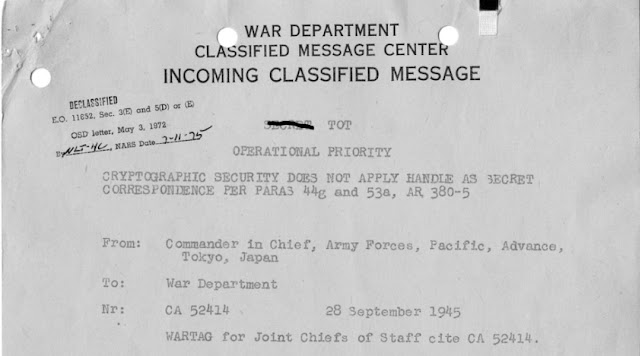

"I might add at this juncture that the camp doctor, Captain George Morris, a Canadian attached to the Indian Medical Service (thus this could only be Harry Morris) before being captured in Singapore, after the prisoners took over the camp themselves, daily treated dozens of Jap (sic) and Korean women and children. He refused no one. This went on until the prisoners left. His fame went abroad: so much that he had women calling on him from ten miles distant."
You can read much more about the Hog Wild in a forthcoming book.
The conditions in Changi were inhumane but those in Konan were even worse and the conditions in which the POWs were transported from Changi to Korea were as appalling as African slave ships. For many POWs their 40 day voyage from Singapore to Korea on the 'Fukkai Maru' was their worst experience of captivity. There is a book of sketches of camp life and the voyage drawn by J.D. Wilkinson, an Australian.
 |
| J D Wilkinson |
The POWs at Konan were put to work manufacturing carbide, British POW Dick Sawbrick recalled:
We were to supply a work force for the main plant there. To the best of my knowledge the fuel for most if not all vehicles in Korea was that of carbide. It was part of our function to feed the carbide furnaces at the plant. There were four furnaces situated on an upper floor. Each furnace was about 40' diameter and of a circular shape. The task comprised of feeding the furnaces with a limestone product and coal. During an eight hour stint to the best of my recollection there were three man teams to each furnace. The task involved feeding the furnace at high speed otherwise the surface contents of the furnace became white hot and conditions of work became even more akin to being in part of Dante's Inferno. Each man completed twenty minutes work followed by a forty minute break during which period two other teams did their stint. Each five days we completed a twelve hour shift for purpose of changing to next shift. The furnaces were manned twenty four hours of each day. Because of the activity involved and the nature of the work there was generally a permanent dust cloud.
 |
| September 1945 Konan POW Camp, Korea. No 3 Squad, Sgt Lyons.159 Front row, second from left awaiting 100% positive ID as Harry Morris |
Another British camp survivor James Miller recalls Dr. Morris telling him that under such conditions they couldn't expect to live much longer than a year which encouraged James to plan an escape. Miller and other prisoners with foundry expertise managed to pull off elaborate acts of sabotage, stopping the carbide production. When food was dropped by several B-29s (one presumably the Hog Wild) Dr. Morris warned the prisoners not to gorge themselves.
When the Russians liberated Konan, there were further atrocities. A declassified communique sent on 28th September 1945 by Leonard E. Bardsell of the Australian Department of Information found in the President Truman Library cites a Canadian doctor 'George' Morris (surely Bardsell meant Harry) treating the local population:


"I might add at this juncture that the camp doctor, Captain George Morris, a Canadian attached to the Indian Medical Service (thus this could only be Harry Morris) before being captured in Singapore, after the prisoners took over the camp themselves, daily treated dozens of Jap (sic) and Korean women and children. He refused no one. This went on until the prisoners left. His fame went abroad: so much that he had women calling on him from ten miles distant."
John Mill relates; "in no small effort by your grandfather there, were only 5 deaths out of the 350 men at the camp, and most of those were near the end of the was when the Japanese were running out of medicines. The camp was situated next to a malarial swamp and so mosquito borne illnesses were common. The men who died or were gravely ill suffered from illnesses which today would be considered easily treatable and even in those times, a good course of penicillin would have done the trick."
I think it is this kind of selfless humanity which really shows the measure of the man that was Harry Morris. He is an inspiration to his descendants and all of us who now live in the free world owe him and millions of others an eternal debt of remembrance.
I think it is this kind of selfless humanity which really shows the measure of the man that was Harry Morris. He is an inspiration to his descendants and all of us who now live in the free world owe him and millions of others an eternal debt of remembrance.
You can read much more about the Hog Wild in a forthcoming book.
So what is so extraordinary about the Hog Wild? On Oct. 3, 1946, American journalist David Snell wrote a front-page headline story in the Atlanta Constitution which claimed that Japanese scientists had built and tested an atomic weapon at sea, just days before Japan surrendered.
When Soviet forces arrived in Hungnam, they discovered the Japanese nuclear facility, kidnapped six of its scientists, and tortured them for their atomic "know-how."
Snell speculated that the Hog Wild was downed by the Soviets to keep the crew from discovering the former-Japanese nuclear facility.
Harry arrived home in Halifax on 19 November 1945 after travelling via Manila, San Francisco and New York. Diana recalls being awoken and reacting in horror at the gaunt stranger sitting at the foot of her bed and being told this was her father. In a letter written a month later, Phyllis attributes her husband's survival and recovery with few ill effects except for "a few readjustments" after three years and ten months captivity to his "solid Newfoundland constitution".
Harry's son David recalls his father saying the Australians suffered most at the hands of the Japanese because they were less likely to kow-tow to the guards and more inclined to act with pride and dignity rather than the shame expected by their captors. Several close family members say they cannot recall Harry ever speaking of his POW experiences.
While Harry is often cited as a Major, during his internment he was just a Captain which is a
junior rank. In November 1947 while serving with the Indian Medical Service on
the Northwest Frontier - presently North Waziristan in what is now Pakistan - he was promoted to Major. Copies exist of letters he wrote to the authorities to complain that for promotion purposes he
had been 'frozen' as a POW despite his duties as camp doctor, while if
he had held a nice, safe job back in India he would have been promoted years
earlier.
MORRIS DESCENT
Information from the Anglican Parish of Trinity Church Records that are held in the Trinity Historical Society Archives, Trinity, NL, Canada and family trees on record.
1. Samuel Morrice [b.circa 1749] From St. Edmund, Salisbury, England
Sp.1. Mary Pinhorn [c.02-09-1761] [bur.04-08-1818] dau. of Benjamin & Elizabeth
Married 24-06-1782 in Trinity
2. Joseph Morrice [c.14-06-1786] age 6 mts., Trinity [d.21-01-1876] Cuckhold’s Cove
Sp. Elizabeth Wiseman [c.03-11-1789] [d.28-02-1861] Cuckolds’ Cove, dau of John & Mary
Married 26-10-1807 in Trinity
3. James Morice [b.28-11-1811] Cuckold’s Cove
Sp. Tamassin (Tamour) Stone [b.27-06-1811] Bonaventure, dau of Henry & Mary
Married 11-11-1835 in Trinity
4. Joseph Morris [b.10-12-1840] Cuckold’s Cove [d.15-10-1923]
Sp. Christina Crocker [c.05-11-1848] Trinity [d.26-12-1932] Portugal Cove, bur in Trinity, dau of Stephen & Catherine
Married 07-12-1879 in St. Mary’s Church, St. John’s
5. Orlando James Morris [b.19-08-1881] Trinity [d.25-09-1916] lost with schooner H.V. Morris
Sp. Sarah Lillian Fowlow [b.18-12-1881] Trinity East [d.29-01-1955] St. John’s, dau of Robert
Married 29-09-1909 in Christ Church, Trinity East
6. Henry Victor Morris [b.10-12-1913] Trinity [d.Nov 79] Vancouver, BC
Sp.1 Phyllis Tapp
7. Diana Morris [b. 1939]
Sp.1 Geoffrey Bocking [b. 10.4.1919] Ealing UK [d. 1969] Wiltshire, UK
Married 1960 in London
8. Tanya Bocking [b. 1963] Bradford on Avon UK [d. 2003] E. Sussex UK
11 Dec 2012
The 80's
Sporting a trilby was an 80's thing.
 |
| Danny A-B |
 |
| Amanda - T - Jassy |
Maggie Thatcher was elected in 1979 and in the ashes of Punk was planted the seeds of a social revolution that outlives the now putrid corpse of the New Romantics.


Tanya and I can rightly claim we were there at the beginning though one wouldn't normally "Bragg" about it. In 1980 Billy and Wiggy, then together as the punk band Riff Raff, made one of the very first video albums, just a few months before MTV was launched in the USA. Released on VHS cassette, Every Girl an English Rose was partly filmed in our house because its director and producer Jackie Mackay was a old friend. Tanya was there, likely making tea and toast for everyone and cheerfully putting up with people keeping out of the way by sitting in her bedroom.
I would go over to Acton and do odd jobs at their video production company AVM and use Jackie's darkroom in return. She gave me film and asked me to shoot some of the Riff Raff gigs for her. She would bring her camera too but being their manager, roadie and general mother-hen, she had a lot of other stuff to do as well. I'm 99% certain the lower photo is one of mine because I was using bounce flash. Jackie, with her consummate skill and better lenses, would typically shoot at wider aperture and push-process.
Brixton erupted in flames in 1981. In February 1983 I left England for California.
On loss
I was thinking yesterday about the pain of loss. Does it go away? Are you damaged goods if you grieve for someone for nine years?

There was a very gloomy impressionistic painting in our house that must have been given to my dad by a friend or student. It was very good but it has since disappeared, of a rowing boat in the moonlight; black water, a white luminescent boat and the blackest possible blue sky.
If Tanya could wish for anything today it would be for us to be happy. We are bereft at having been cast adrift from her but our view of her in our past is not fixed. As we sail away some details are dimmed, some can stay bright for a long time but eventually our feelings of loss will go over the horizon. Then again, there is a safe harbour in our sticking to what we know, by keeping that pain in sight, even if we can’t go all the way back. Here we float, and can only move on when we’re ready to. If we have the courage to dip our oars, our loss will always be there, there’s no denying it, but the empty place in us will be balanced I hope by the positive graces and self knowledge and so growth that the journey has given us.

There was a very gloomy impressionistic painting in our house that must have been given to my dad by a friend or student. It was very good but it has since disappeared, of a rowing boat in the moonlight; black water, a white luminescent boat and the blackest possible blue sky.
Hearing distant music over the water, especially Big Bands, always brings on sadness. Listening to anything distant on the radio, faint over the ether, that must be avoided too. That is my sound portrait of grief.
p.s. I found the painting in the margin of a photo. I wonder where is it now?

p.s. I found the painting in the margin of a photo. I wonder where is it now?

10 Dec 2012
December 10th 2012


9 Dec 2012
Justine 1976

Barely seen since the premiere at the Notting Hill Gate Cinema, it's now on the BFI player. Many listings note that until now it was practically impossible to find.
It's a film seemingly intent on breaking every cinematic rule. However it is quite affecting. The static camera and careless framing forces your attention to listen to the dialogue which is delivered mostly by non-actors like Tanya, often with their back to the camera. The cinematic language employed by the filmmaker is so alien it challenges the viewer to pay attention and yet it cares not a jot for their indifference. But if they do; they may be appalled at the cruelty and erudition of the arguments in De Sade's text for his libertine behaviour and, put rather well, for his atheism. Tanya's scenes are followed by a long speech from the Marquis De Sade (but it's all quite confusing who is who) making quite a convincing (though immoral) argument for murdering and raping one's children. It's a very odd film indeed.
From Time Out Film Guide:
"Who nowadays reads de Sade? His precise, logical catalogues of moral and sexual behaviour belong to a vanished time with a vanished language. If de Sade lives, it's through his present-day interpreters: de Beauvoir, Barthes, Pasolini. And the Film Work Group, whose Justine is an isolated and very honourable attempt to bring an important strain in contemporary European thinking into British consciousness. The film comprises a series of non-dramatic tableaux, representing
incidents from the first third of the book: although the period trappings are all there, there's no attempt to 'involve' the audience by creating a 'plausible' historical reality. Instead, the visual tableaux and long speeches set out to present de Sade's book in a form that modern viewers can broach and try to come to terms with. No one could pretend that it's a complete success, but its challenge is real."

incidents from the first third of the book: although the period trappings are all there, there's no attempt to 'involve' the audience by creating a 'plausible' historical reality. Instead, the visual tableaux and long speeches set out to present de Sade's book in a form that modern viewers can broach and try to come to terms with. No one could pretend that it's a complete success, but its challenge is real."
The film's director Stewart Mackinnon is a very interesting artist who started as an illustrator and got noticed for his work in 60's magazines such as Oz whilst still a student at the RCA. Here's a really in-depth profile
https://designobserver.com/feature/stewart-mackinnon-ruptured-and-remade/26288
No one remembers how Tanya got connected with this but it may have been the filmmaker Sally Potter, whose father was a friend of her father. Tanya had little ambition to be a show-off for the camera but she looked the part. Her involvement in this production entailed being fitted in painful corsets by the costumer designer, Phoebe De Gaye who later did 'Killing Eve'.
We don't recall if any teachers asked Tanya "what did you do in your summer holidays?" but one can imagine the reaction if she had said "I made a movie about the Marquis de Sade..." Tanya worked hard at memorising her speech, but she admitted she cringed when she realised how precisely the microphone emphasised that she couldn't pronounce ‘r's; so she sounded weally, weally posh.
Stewart Mackinnon is still working in films as a highly respected producer. The title role in Justine was played by Alison Hughes who later pops up in Coronation Street but she was also in the cult classic The Wicker Man. She and the presence of the actor/director legend Ken Campbell must give Tanya a low 'Bacon Number' to practically any British actor.
Its obscurity is so great that you find any reviews of it except for Time Out. Even the BFI house organ Sight & Sound (Winter 1976) only mentions it in passing comment on a wave of avant-garde films;
"...a feature like Justine suggests that pre-production discussions were probably a lot more interesting than anything which turns up on the screen, the ambitiousness of such an enterprise seems so admirable in the teeth of such indifference that the mere fact of its existence is somewhat awe-inspiring..."
An online reviewer called Ereck commended it on Letterboxed:
"A challenging film— interestingly so to my mind— in what it attends to (Sade’s philosophizing but also costumes and locations which are astonishing in their historical accuracy) and what it refuses (showing anything exciting or titillating and following any film grammar that facilitates an audience’s giving themselves up to the spectacle or narrative or both). Intellectually, aesthetically, historically, these choices make for a viewing experience at once constrained and dynamic, resonating intensely with the script’s discussions of libertinism, virtue, law, nature, and the (in)significance of human life."
It'll set you back £3.50 to watch it on the BFI player. It inexplicably ends a minute before the print actually did though.
https://player.bfi.org.uk/rentals/film/watch-justine-1976-online

 |
| Alison Hughes - The Wicker Man |
Other glimpses of Tanya, myself and other members of our family can be seen in the 1973 educational film Medieval Society directed by W. Hugh Baddley which explains the structure of society and the occupations of people in Medieval Europe about the year 1350. We also appear in another Gateway Production: 'Understanding Shakespeare: His sources' which was filmed 1971 in West Stow, Suffolk, at several National Trust properties, Laycock and a Globe Theatre recreated inside St. George's Church Tufnell Park long before Sam Wanamaker did it. This film was also directed by W. Hugh Baddley and George Murcell. Tanya recalled to me she didn't escape being recognised when these films were screened in her school.
Later on Tanya got behind the camera as a dogsbody/driver/craft service on the all-woman production The Gold Diggers.
8 Dec 2012
The Square

As a single-parent family there was no silver spoon in our mouths. For 38 years we rented a basement flat in a subdivided 1830's terrace house which had a chronic damp problem that builders sent to fix just papered over. We were what polite society might have called "distressed gentlefolk".
It wasn't always so. When our parents moved in our father had become a lecturer at a local college and was the chairman of various committees on design education and had some recognition as an intellectual force, so he had expectations he would be able to support us and his previous children.
Our landlord was a Quaker spinster who owned several houses in the square and surrounding area and she believed in social mixing so she would only rent to people she liked that had occupations she valued. It took several interviews for my dad to get the original tenancy. He describes in a letter how he applied some spatial analysis to where he wanted to live; within so many miles from his work, near a tube, shops, bus routes etc., but most importantly, rooms of pleasant proportions and good light as well as an affordable rent. He walked radially from the college in a different direction every evening, making many notes on the mechanisms of urbanisation in Hammersmith and Chiswick for his lectures, and leaving his details with every estate agent he passed until something came on the market.
After our parents separated Tanya and I and our mother moved to Kelly Street in Kentish Town to a tiny terrace house shared with a bus conductor and his wife in two rooms upstairs. Kentish Town was vibrant but crowded and there wasn't any open space. Tanya would have her NHS glasses fitted at Mr Seymour the opticians and we probably got coats from Blustons. As there was no indoor bathtub and the Ascot over the sink often broke down, we walked a couple of streets over to a public baths where Irish women scrubbed their laundry and we would all pile into a cubicle where a dour matron with the hot tap handle on a key ring would draw our bath. You had to summon her by banging on the pipes and shouting "more hot in 46 please" and she turned on the tap from outside.
At some point my mother, probably because I don't recall we were going to school by then, must have said enough of this and they arranged a swap. We moved back to the square and my dad moved to Kelly Street. When our father died there wasn't any advantage in moving anywhere else as Mum worked at the BBC at a drafting table but her taking time off to care for us during our sequential bouts of mumps and measles and so on caused them to let her go. As a freelance set designer she could sometimes work from home and she converted her bedroom into a studio. Over her shoulder I saw her draft plans for Benny Hill skits and Liberace shows and furnishings for Gatwick Airport and The Playboy Club, then as a mature student she finished her degree that marriage and babies had interrupted.
We certainly had some illustrious and notorious neighbours but there were also artists, teachers, social workers living in the square as well as celebrities like Vanessa Redgrave, Shelia Hancock, Alec Guinness and others but to me they were just my friends' mums and dads. Although with some playmates in the square we might play hide and seek over four floors and make camps under their grand piano, at another it would be an arrangement much like my own; bunk beds four to a room and six kids having tea at the kitchen table whilst their mum bathed the baby in the sink and their underwear dried on the rack stacked on the Nightstor heater. Only once or twice was I made aware that buying our clothes from C&A wasn't quite the same as Kids In Gear.
The square has been featured in several movies; 1964's The Pumpkin Eaters and 2006's Miss Potter are the most often cited but I recall seeing the green trucks of the BBC and other productions more often than that. I am told I once walked into our living room to find Christopher Plummer sitting there, a friend in production had borrowed our house as his dressing room, and I loudly asked my mother "why is the daddy in the Sound of Music wearing curlers..?" Another time there was a crew in the park and after hanging around watching them for a few hours, I and a few friends were asked by an A.D. to play a game in the background of a shot. When I asked what the film was called, I was told it was called 'Percy'. Purdey of The New Avengers lived in the square. I recall the filming taking one day with Joanna Lumley entering and leaving the house in several different outfits and cars.
The best feature of the square was the park in the middle. Here literally was a level playing field fenced from the road and in earshot of a shout from the front door to come in for tea. Bicycles could be ridden around the perimeter path in attempts to set lap records. Across the Great West Road was the River Thames and towpaths to Putney and Richmond. Before we were teens we could cycle free of traffic along the Upper Mall and the LEP warehouses to friends in Chiswick or downstream for a hot chocolate in Riverside Studios, sometimes catching a matinee of something worthy. The concrete banks of a derelict reservoir - now a bird sanctuary - could be ridden like the Brooklands circuit. Later on Tanya and I pounded a route round Hammersmith Bridge and Barnes Bridge in training for marathons.
I won't mention names but I find it interesting that with such creativity around us, so many of the children from the square, both from well off and poorer families, have done well in many creative fields. It's not been by networking or having contacts, though that can help, but that Hammersmith had good schools and facilities back then and the collective aspirations of our peer-group and the role-models around us must have influenced our choices.
With the go-go Eighties and Nineties, eventually the rented houses in the square succumbed to spiralling property values and were sold off to bankers and stockbrokers and the area went downhill. I no longer heard opera chorus singers practising nor saw so many neighbours in the Hobby Horse. I did hear a child crying all the time and the father I never spoke to always shouting at him. As we had no car, a neighbour parked his Ferrari outside our house, his own parking spot taken by his Aston Martin.
Vanessa downsized and moved away. A residents association was formed who got fed up with the Norman Garage parking in the street so they introduced permit parking. They had the park in the middle locked where Bob Marley and associated stars hanging around in recording sessions at Island Records used to play football with us.

Vanessa downsized and moved away. A residents association was formed who got fed up with the Norman Garage parking in the street so they introduced permit parking. They had the park in the middle locked where Bob Marley and associated stars hanging around in recording sessions at Island Records used to play football with us.

Subscribe to:
Posts (Atom)